Wastewater & Effluent
Industrial Effluent & Discharge Compliance Monitoring
Prove compliance at the discharge point — continuous, defensible effluent monitoring of COD, ammonia nitrogen, turbidity and pH with data integrity that stands up to regulatory inspection.
01Definition
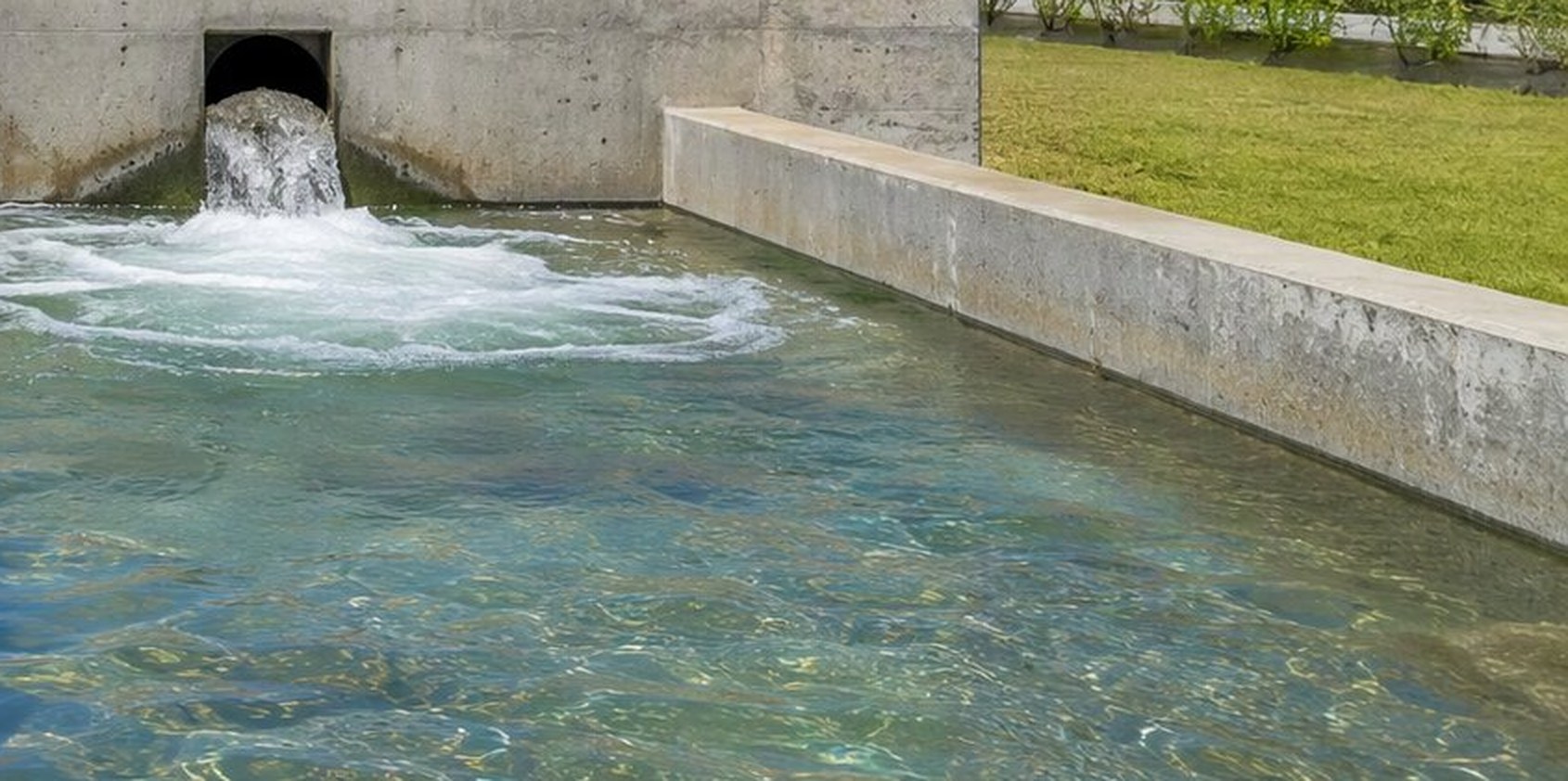
What Is Industrial Effluent Monitoring?
Industrial effluent monitoring is the continuous online measurement of discharge quality at regulated outfalls — COD, ammonia nitrogen, suspended solids and pH — producing time-stamped, tamper-resistant records that demonstrate adherence to discharge permits.
02Your Challenges
Customer Challenges
Discharge permits increasingly demand uninterrupted online data. Gaps, manual-only records or unstable instruments create direct compliance risk.
Permits typically cover COD, ammonia nitrogen, pH and suspended solids at once — an exceedance in any one of them is a violation.
Discovering a limit breach from a laboratory report means it already happened. Online early warning lets operators act while correction is still possible.
Compliance data must be time-stamped, traceable and tamper-resistant — from the sensor through the data terminal to the reporting platform.
03What to Measure
Monitoring Parameters & Their Significance
What to measure at each monitoring point — and why it matters for your process.
| Monitoring Point | Parameters | Significance |
|---|---|---|
| Final effluent / discharge outfall | COD (UV254), ammonia nitrogen, turbidity / suspended solids, pH | Continuous verification of every permitted parameter at the legal measurement point |
| Monitoring station & data logging | All parameters with time-stamped records | Audit-ready data chain — continuous logging, threshold alarms and regulatory reporting |
| Receiving water (optional) | COD, turbidity, ammonia nitrogen | Downstream impact verification and early warning for sensitive receiving waters |
04Engineered for This Scenario
Recommended Products
The instrument configuration our application engineers recommend for each monitoring point.
Discharge quality monitoring
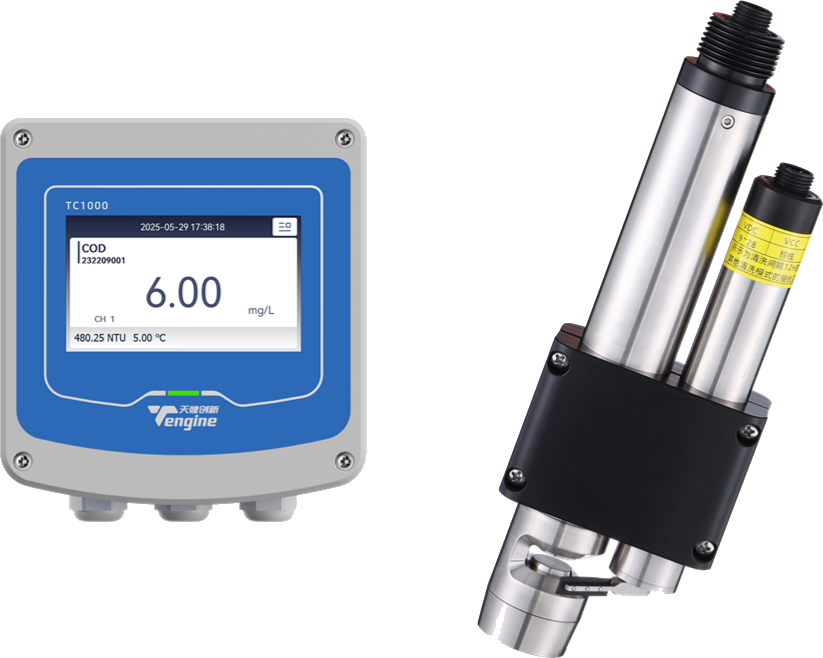
COD / Organics (UV254)
UVC Integrated Online COD Sensor
Reagent-free UV254 absorption COD sensor delivering results within 1 second, with dual-beam turbidity compensation.
View instrument
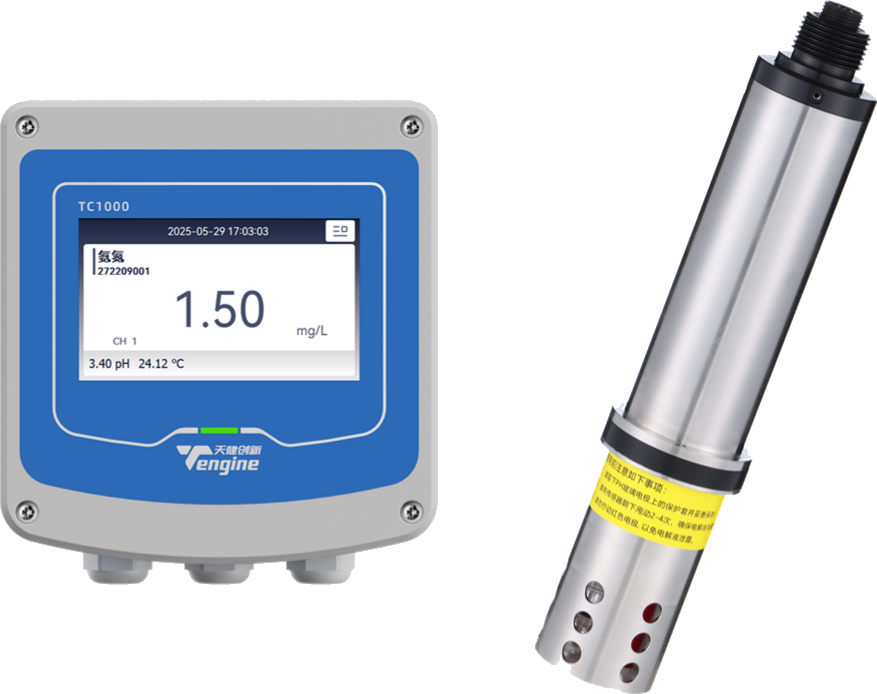
Ammonia Nitrogen
DNH Ammonia Nitrogen Sensor (ISE Method)
Ion-selective electrode ammonia nitrogen sensor for nutrient monitoring in wastewater treatment and surface water.
View instrument
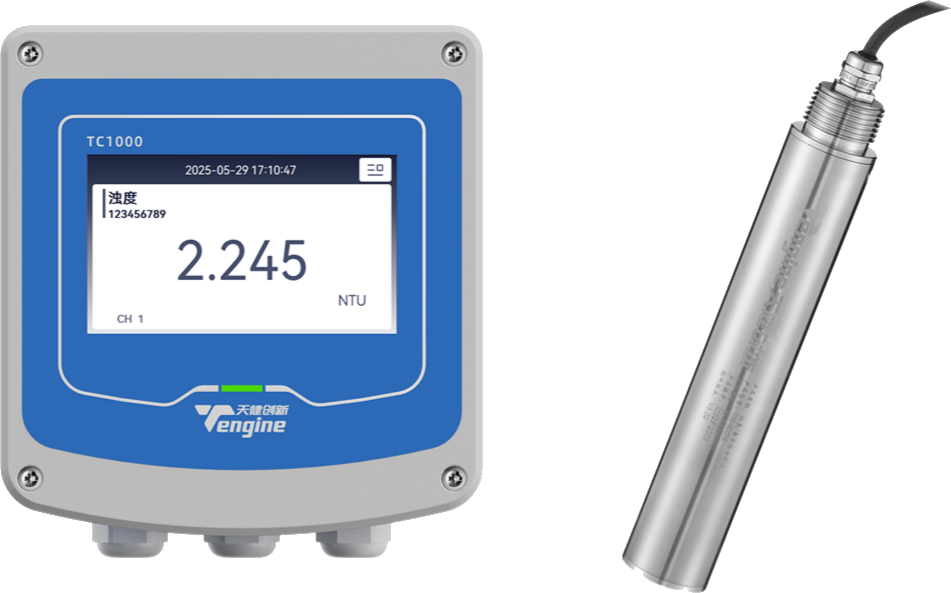
Turbidity / Suspended Solids
TSS Immersion Turbidity / Suspended Solids Analyzer
Dual-angle infrared scattering analyzer for continuous turbidity and suspended solids measurement in wastewater and drinking water processes.
View instrument
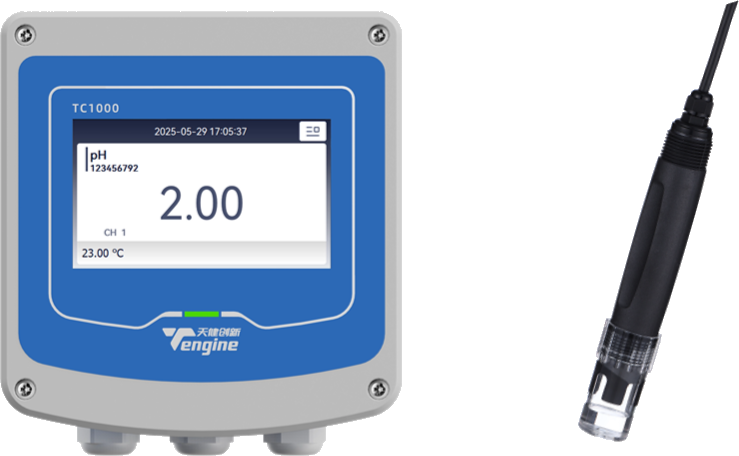
pH
TPH pH Analyzer
Online pH analyzer for continuous process control, neutralization and discharge compliance monitoring.
View instrument
Station control & data management
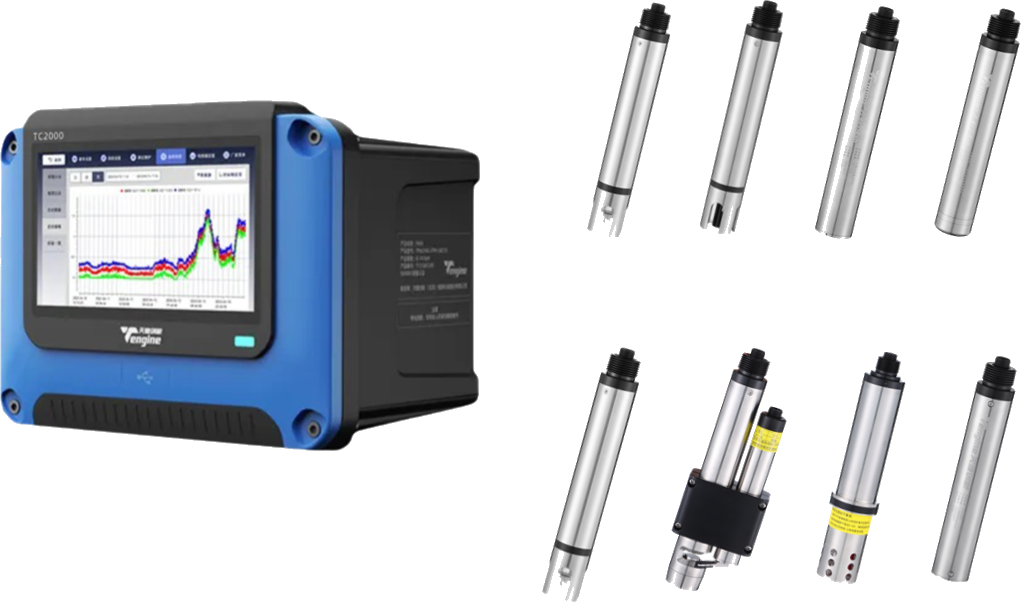
Multi-Parameter Controller
TC2000 Multi-Parameter Controller
Advanced multi-parameter controller for TENGINE digital sensors — multi-channel display, data logging, control outputs and remote transmission for process and compliance monitoring.
View instrument
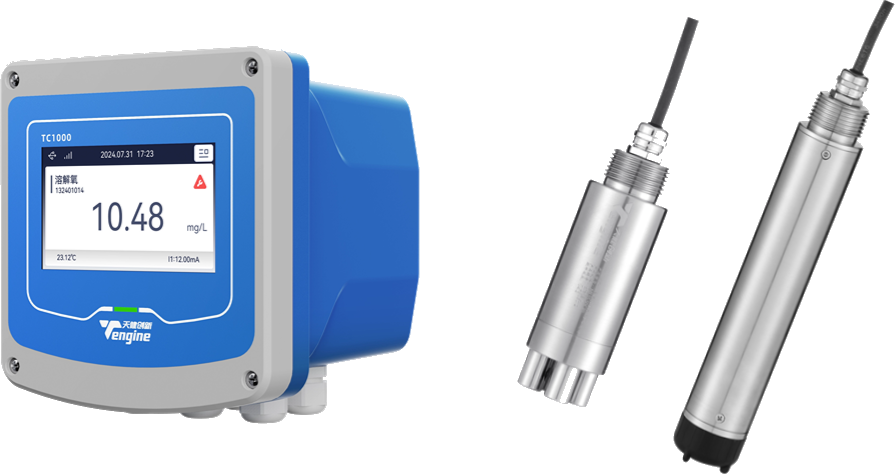
Multi-Parameter Controller
TC1000 Classic Controller
Universal controller supporting digital and analog sensors across 10+ water quality parameters, with touchscreen operation and 4–20 mA / RS485 / relay outputs.
View instrument
05What You Gain
Customer Benefits
Continuous, time-stamped measurement with data logging provides the defensible evidence chain regulators expect — from sensor to report.
Threshold alarms alert operators before limits are breached, turning compliance from after-the-fact reporting into active prevention.
UV254 COD and ISE ammonia measurement run continuously without reagents — no cycle gaps, no consumable logistics, no missed events.
06Proven in the Field
Project References
All case studies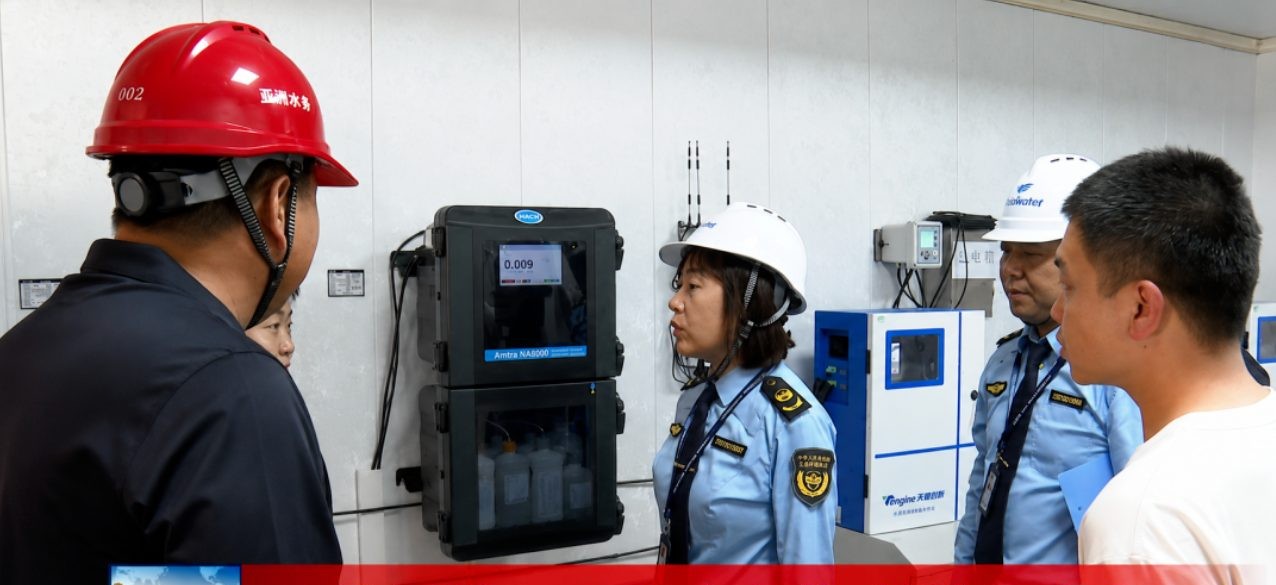
Plant effluent discharges directly into the Wei River. As a key river outfall, it demands extremely high data accuracy, stability and continuity. Conventional supervision lacked real-time data, making dynamic outfall control and anomaly tracing impossible; the region also faces national-section quality assessments, requiring credible, traceable online data.
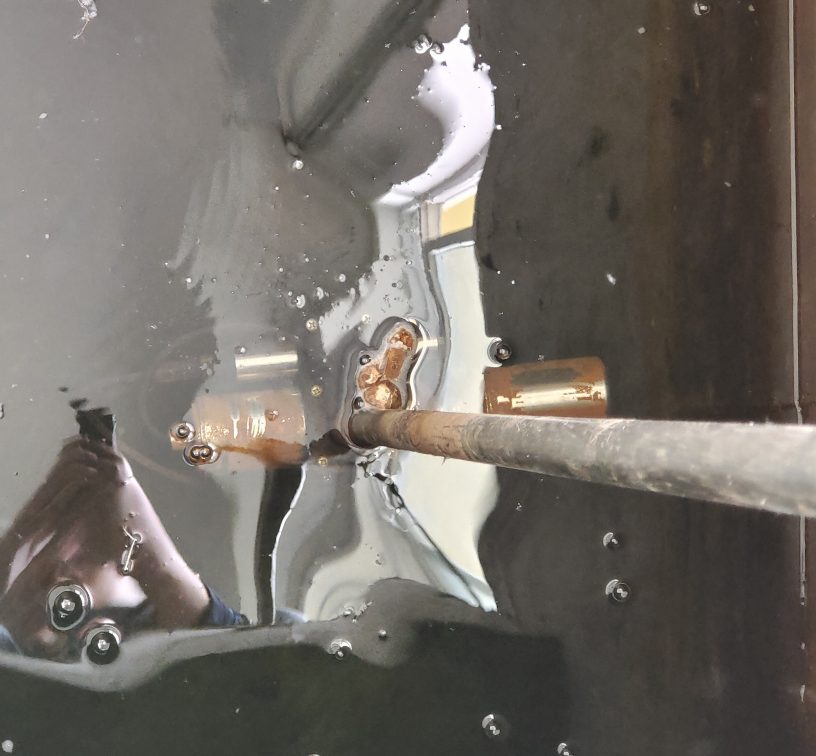
Industrial wastewater mixed into the influent caused large quality swings. Denitrification needed flexible control, but manual lab testing lagged — making it impossible to predict total-nitrogen exceedance or guide carbon dosing, creating an effluent-compliance risk.
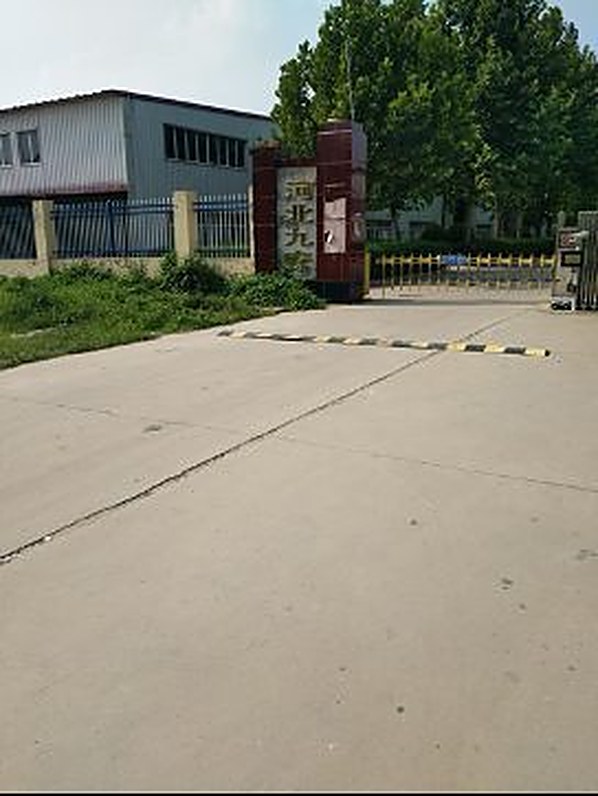
A door manufacturer needed to monitor its factory discharge outlet to ensure compliance and avoid environmental violations, but lacked continuous monitoring.
07Integration
Communication & System Integration
Frequently Asked Questions
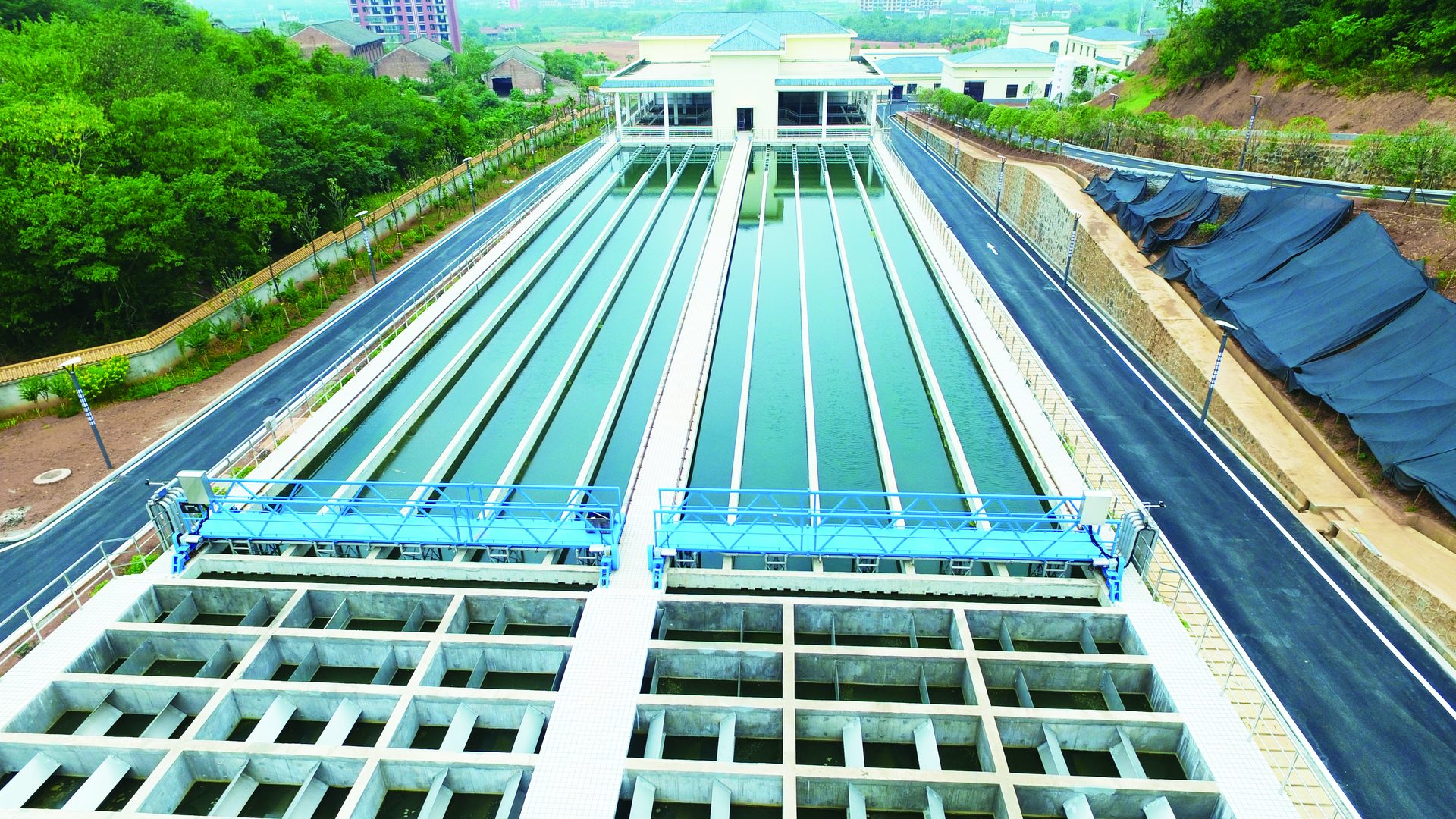
Discuss your industrial effluent monitoring project with us
Share your monitoring points and required parameters — our application engineers will design a complete configuration for your project.