
Residential Secondary Supply
Smart Secondary-Supply Monitoring for Residential Communities in Fuliang
 1 / 2
Project Background
In Fuliang County, the water utility is progressively taking over secondary-supply operation for residential communities — inheriting many monitoring points with a small O&M team, and a strict national limit of 0.05 mg/L for residual chlorine at network ends.
Customer Challenge
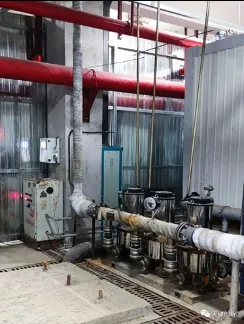
Conventional chlorine instruments need frequent electrolyte and DPD reagent replacement — unaffordable at this scale. Community pump rooms are cramped, and most devices on the market cannot measure stably down at the 0.05 mg/L national limit where secondary-supply compliance is actually judged.
The TENGINE Solution
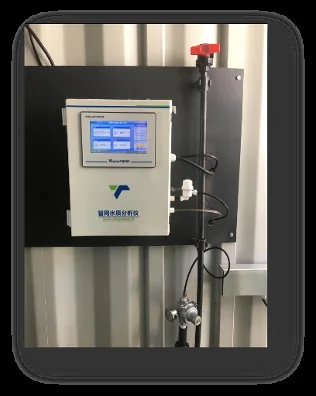
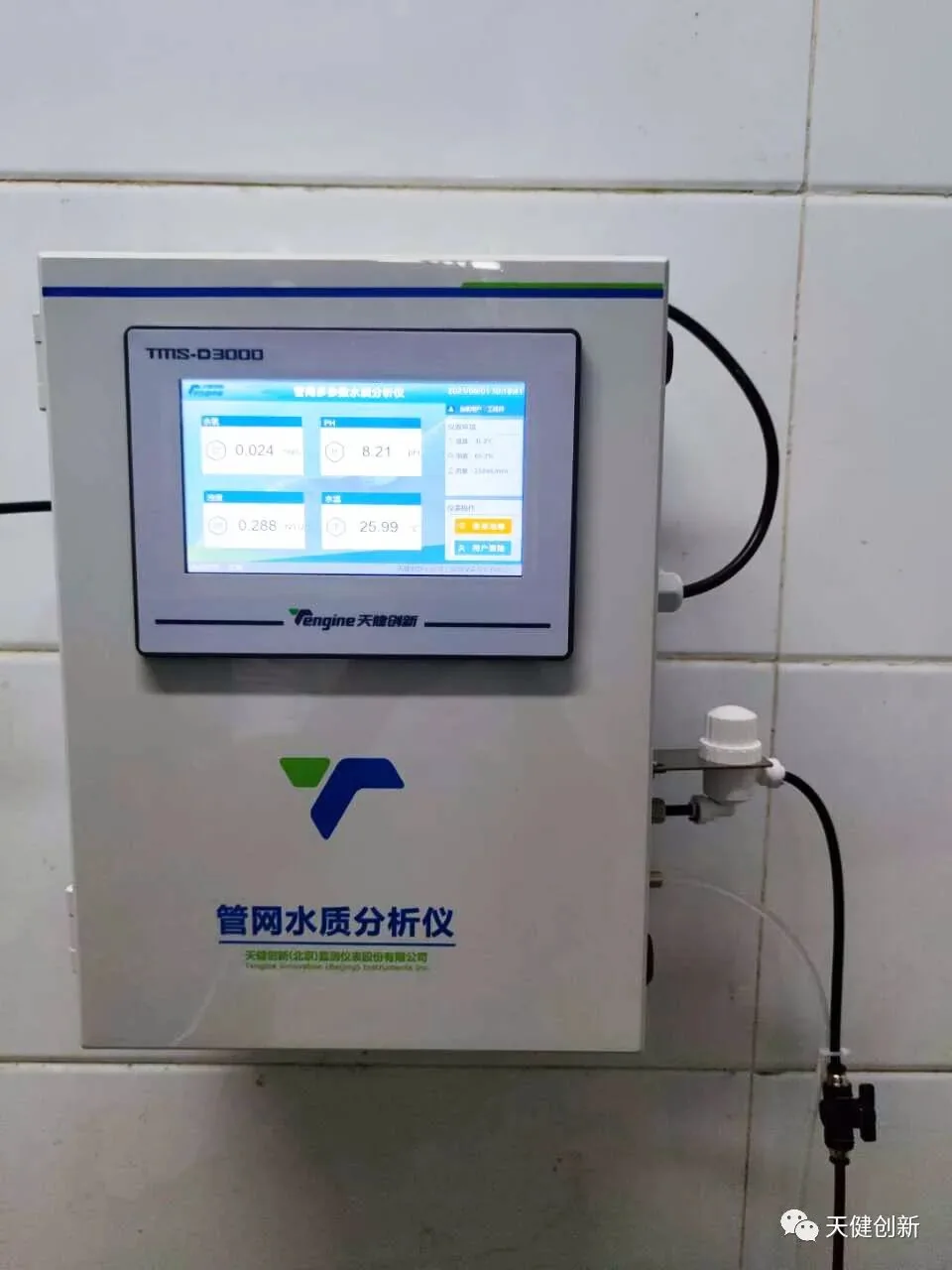
TMS-D1000 and TMS-D3000 network multi-parameter analyzers were wall-mounted at community secondary-supply outlets. Microelectronic chlorine measurement needs its membrane cap replaced only once a year; the turbidity module self-degasses; and the whole unit is compact enough for the tightest pump room — while measuring chlorine accurately to 0.02 mg/L, comfortably covering the 0.05 mg/L limit.
Implementation
Wall-mounted analyzers were deployed at the communities' secondary-supply outlets, with installation completed in the existing pump rooms without modification.
Project Results
The utility now runs its growing secondary-supply monitoring network with minimal consumables and maintenance: 0.02 mg/L precision keeps the 0.05 mg/L national limit firmly in view, and residents' tap water at the network end is verifiably safe.
Related Case Studies
Secondary supply adds storage and pressurization after the municipal network, and water quality can degrade in tanks and pipes. Without online monitoring at the pump station, a quality problem would only surface at residents' taps.
At the network's far end inside the park, residual chlorine and turbidity readings run low — below the reliable range of ordinary instruments. The park needed monitoring accurate enough at low concentrations to prove its water was truly safe.
Zoned supply means small chlorine fluctuations at low range — demanding real measurement precision — while day-to-day operation falls to a property team without instrument specialists. Equipment had to be highly stable and low-maintenance, and installation had to work in a cramped underground pump house.
Facing a similar monitoring challenge?
Tell us about your application — our engineers will reference this project experience and design a solution for your site.