Stormwater Outfall Monitoring
Smart Rain-Sewage Diversion Monitoring at 30 Stormwater Wells in Nanchang
 1 / 2
Project Background
Nanchang's rain-sewage diversion program needed to know what actually flows through its stormwater wells — capturing sewage on dry days, holding back first-flush rain, and letting clean later rainwater through to the river.
Customer Challenge
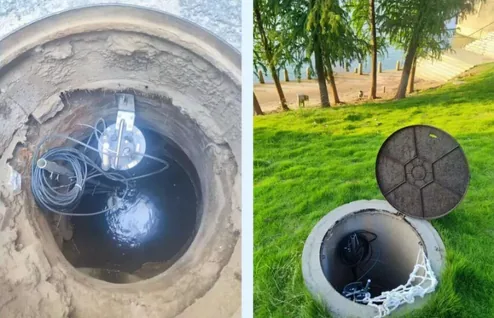
The monitoring points are numerous and sit inside stormwater wells: cramped, harsh underground spaces where installation is difficult. The system had to feed flow, level and conductivity data to the municipal smart supervision platform — with battery power and wireless transmission, since wells have neither.
The TENGINE Solution
Thirty stormwater-well monitoring points were equipped with DNF drainage-network flow meters and DHT downhole data terminals. A fluidics-optimized compact body reduces flow disturbance; built-in intelligent algorithms auto-recognize flow conditions; battery power plus wireless transmission keeps each unit running for over a year; and the full suite reports flow, level and conductivity to the municipal platform.
Implementation
TENGINE's technical team completed installation, commissioning and go-live across all 30 downhole points in just 5 days — an efficient multi-point underground rollout.
Project Results
The diversion system now runs on real-time data from all 30 wells: dry-day sewage interception, first-flush capture and clean-rain discharge are all verifiable. The battery-wireless design needs no power or cabling in the wells, and the project became a model for digital, intelligent drainage management.
Related Case Studies
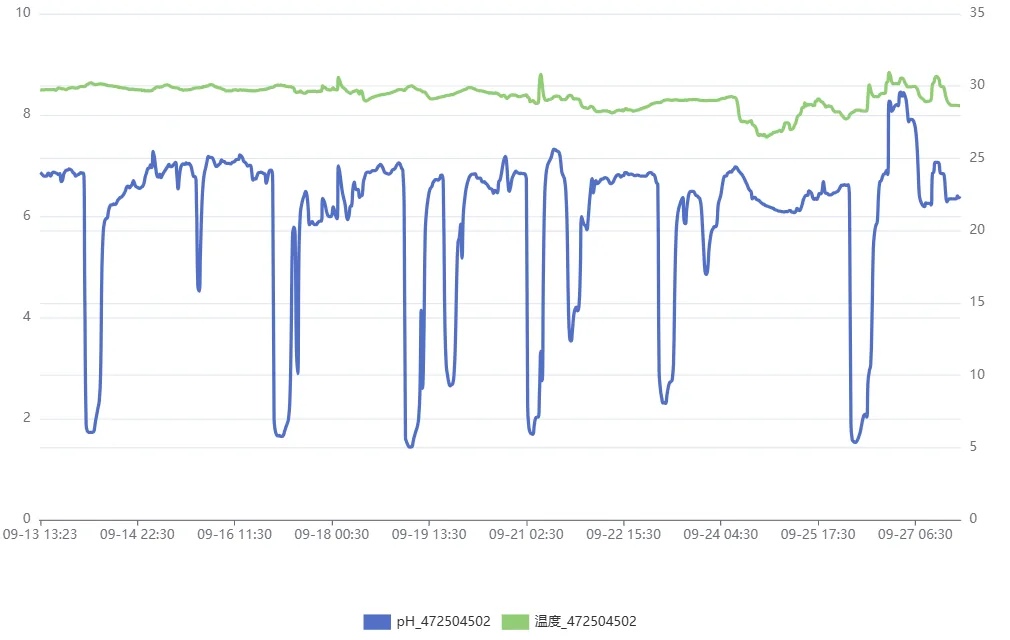
Illegal discharge is hard to catch: it typically happens in the small hours when manual patrols cannot cover; discharge points are scattered and some enterprises use hidden pipes; and without continuous data, regulators only discover pollution after the damage is done.
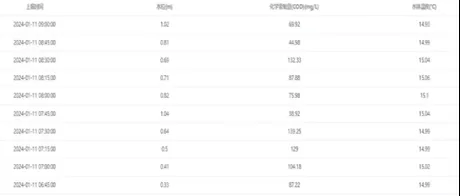
Downhole environments are cramped and complex, and the city had no real-time monitoring inside the network at all. Instruments had to fit tight wells, resist the conditions, and deliver data reliably from underground.
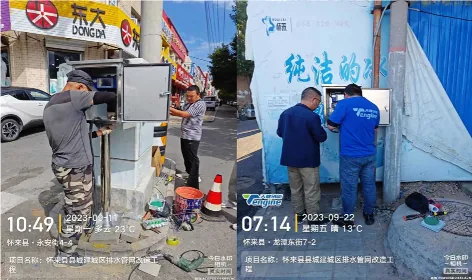
Old-town pipe conditions are complex, and different wells need different watches. A uniform configuration would overspend where little is needed and underserve the critical points — the scheme had to match monitoring depth to each location's actual risk.
Facing a similar monitoring challenge?
Tell us about your application — our engineers will reference this project experience and design a solution for your site.