
Urban Drainage Network
28 Downhole Monitoring Points for Ruichang's Urban Drainage Network
 1 / 4
Project Background
As part of Ruichang's urban drainage-network improvement program, the city needed to see inside its domestic-sewage and stormwater wells — understanding both the quality and the hydraulic condition of what the network carries.
Customer Challenge
Downhole environments are cramped and complex, and the city had no real-time monitoring inside the network at all. Instruments had to fit tight wells, resist the conditions, and deliver data reliably from underground.
The TENGINE Solution
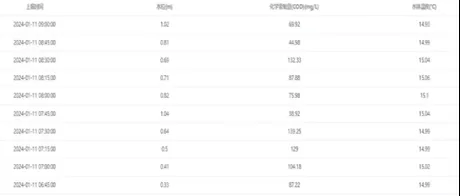
Twenty-eight downhole monitoring points were built with DHT downhole data terminals, integrated UVC-COD analyzers, TPL static-pressure level meters and integrated conductivity sensors — covering COD, level, conductivity and temperature. The UVC-COD analyzer carries CCEP certification, with a dual-optical-path design that resists color and turbidity interference; sensors are fixed to the well wall on immersion brackets, and data uploads wirelessly to the municipal management platform.
Implementation
TENGINE engineers arrived on site within 48 hours and completed all 28 points — installation, commissioning and platform integration — in 7 days.
Project Results
Sewage and stormwater discharge is now monitored around the clock across the network: quality and quantity data for different periods supports precise identification of abnormal discharge, and reliable data underpins the city's drainage supervision and management.
Related Case Studies
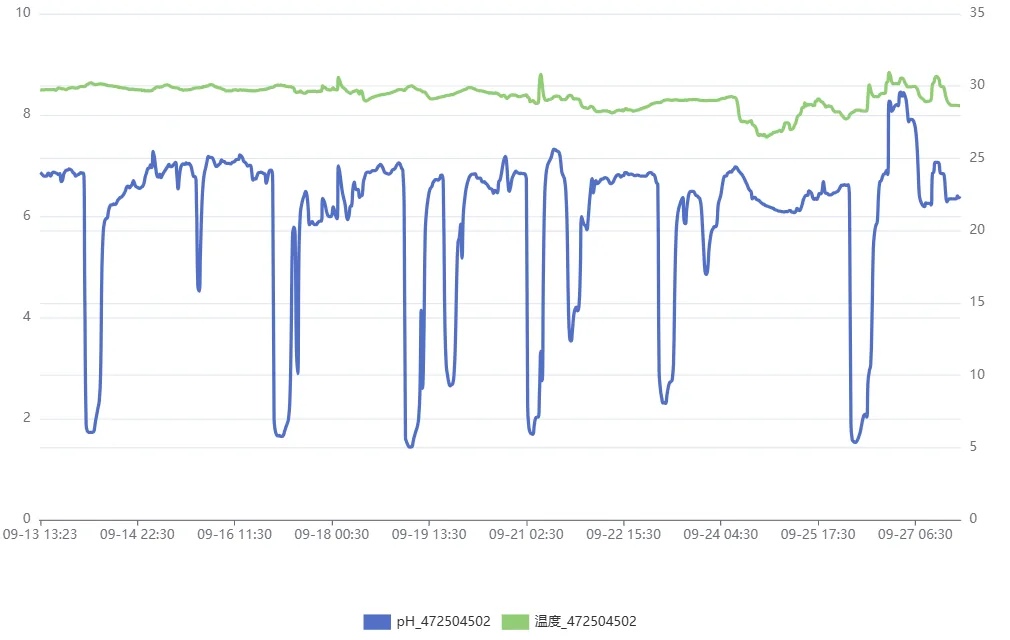
Illegal discharge is hard to catch: it typically happens in the small hours when manual patrols cannot cover; discharge points are scattered and some enterprises use hidden pipes; and without continuous data, regulators only discover pollution after the damage is done.
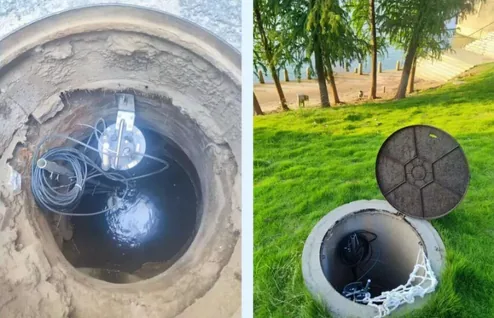
The monitoring points are numerous and sit inside stormwater wells: cramped, harsh underground spaces where installation is difficult. The system had to feed flow, level and conductivity data to the municipal smart supervision platform — with battery power and wireless transmission, since wells have neither.
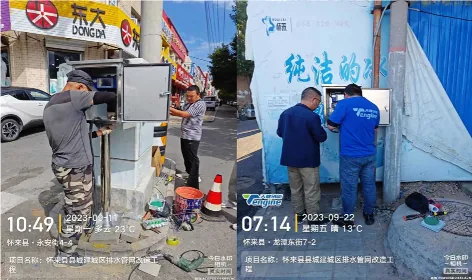
Old-town pipe conditions are complex, and different wells need different watches. A uniform configuration would overspend where little is needed and underserve the critical points — the scheme had to match monitoring depth to each location's actual risk.
Facing a similar monitoring challenge?
Tell us about your application — our engineers will reference this project experience and design a solution for your site.