
Hướng dẫn ứng dụng
Sludge Blanket Monitoring: From Clarifiers to CASS and Intelligent Discharge
Why blanket level data fails as a control input without quality flags — and how machine-learning ultrasonic analyzers enable stable CASS operation and truly automatic sludge discharge.
Hướng dẫn ứng dụng 4 min phút đọc
Đội kỹ thuật ứng dụng TENGINE
Viết và rà soát bởi kỹ sư của chúng tôi — hơn 20 năm thiết kế hệ thống giám sát chất lượng nước trực tuyến, hơn 160.000 thiết bị đang vận hành toàn cầu.
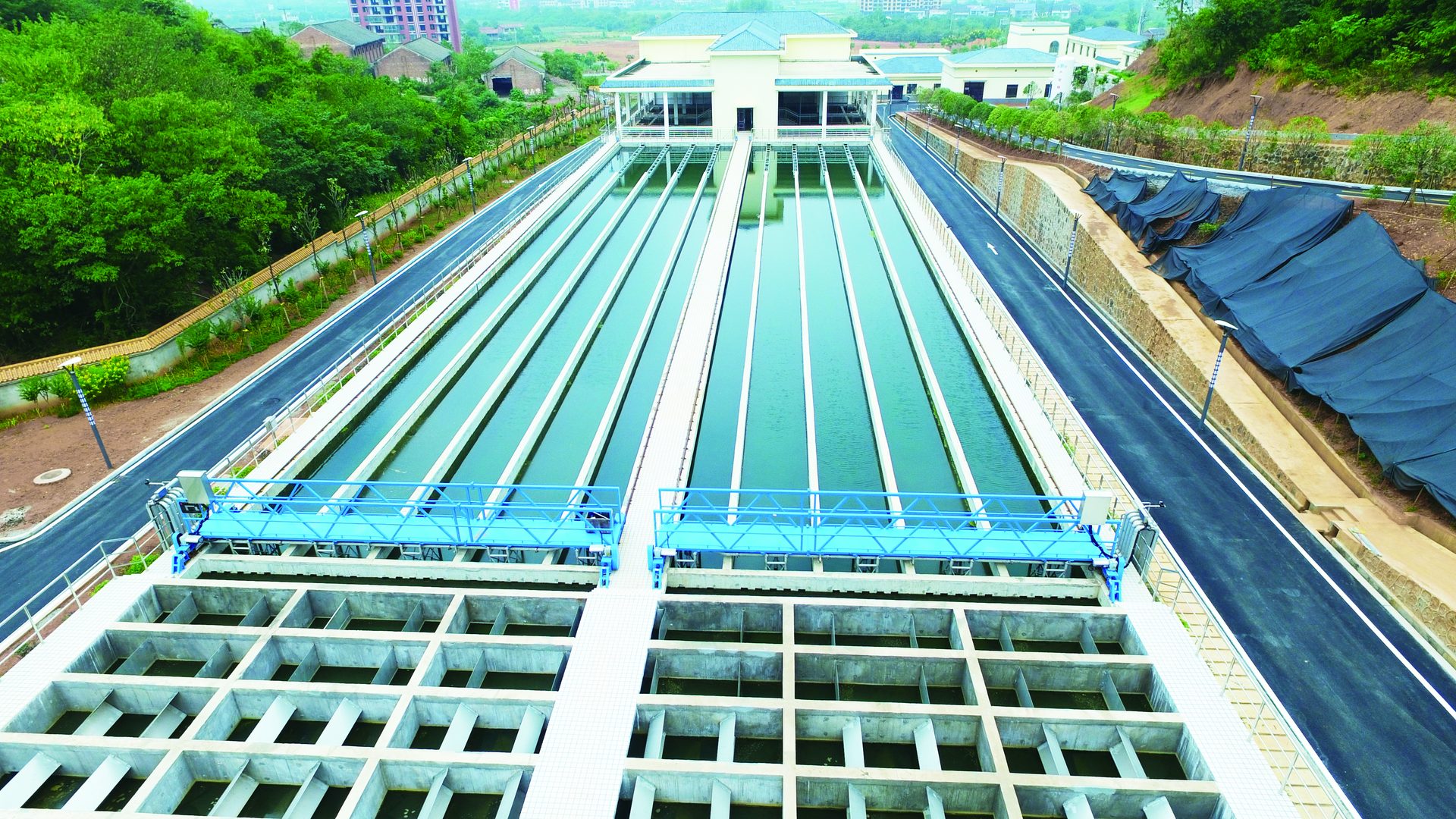
In secondary clarifiers, CASS basins and thickeners, the sludge blanket is the process variable nobody can see — until it fails. A rising blanket washes solids over the weir; a blanket run too low exports thin sludge that crashes the dewatering line. Continuous blanket level measurement turns both failure modes into manageable control problems.
Why Blanket Data Fails as a Control Input
Raw level numbers from an ultrasonic blanket meter are not control-ready data. Fluff layers, ragging, floating debris and density gradients all produce echo ambiguity. A bare "distance to interface" value without quality information is exactly how automatic desludging systems get fooled into pumping water or ignoring a rising blanket.
This is why modern analyzers pair the acoustic measurement with data quality flags: echo strength, confidence scoring, and trend-consistency checks that tell the control system not just what the level is, but whether to believe it. Machine-learning signal processing goes further, learning each basin's acoustic fingerprint so that weak, diffuse interfaces — the hardest case — are tracked reliably.
Ultrasonic Blanket Measurement in Practice
A submerged ultrasonic transducer emits pulses downward (or upward, in upward-looking configurations) and times the echo from the density transition. Key installation details determine success:
- Placement: at least one basin radius from the inlet well and scraper bridge shadow; in CASS, position to survive the decant cycle.
- Mounting depth: submerge the sensor below the lowest expected blanket with margin; surface-mounted downward-looking sensors need stilling considerations in windy clarifiers.
- Scum and ice: floating covers defeat acoustic paths — plan for wiper-equipped sensors or winterization in cold climates.
From Monitoring to Intelligent Discharge
With trustworthy blanket data, the control hierarchy becomes straightforward:
- Alarm level: blanket within a set margin of the weir → increase return rate, alert operations.
- Desludge control: pump or valve duty-cycled to hold the blanket in a target band, rather than on a timer.
- CASS optimization: settle and decant phases adapt to measured settling behavior instead of fixed clock times — real throughput gains on the same tankage.
Plants that move from timed to blanket-controlled discharge routinely report thinner-sludge incidents eliminated and polymer savings on the dewatering line. The instrument cost is recovered in sludge handling efficiency within the first year in most installations.
Blanket monitoring succeeds when you treat it as a control measurement, not a gauge: demand quality-flagged data, install with the acoustics in mind, and close the loop.
Reading the Blanket Profile
A single interface level is the minimum viable measurement; a full settling profile tells you much more. Advanced ultrasonic analyzers return the complete echo envelope, from which trained signal processing distinguishes the clear-water zone, the hindered-settling layer, the compression zone and the rag layer. Watching the profile shape over time detects bulking sludge days before the effluent turbidity moves — a rising, diffuse hindered layer with a weak compression zone is the classic early signature.
CASS and SBR Applications
In sequencing batch reactors the blanket measurement earns its keep twice: during settle, it verifies that the interface clears the decanter before decant begins; during decant, it can terminate the phase early when the blanket approaches the draw point. Both protect effluent quality without padding phase times — and recovering 10–20 minutes per cycle is real capacity on fixed tankage.
Common Installation Mistakes
- Mounting where the scraper mechanism or baffles cross the acoustic path — the strongest echo wins, and it is not the sludge.
- Ignoring thermal gradients in outdoor clarifiers; temperature stratification refracts the acoustic beam on summer afternoons. Compensated sensors handle this; uncompensated ones wander.
- Running one blanket meter per basin when flow distribution is uneven — a basin with a short-circuiting corner needs the sensor near that corner.
Closing the Loop Safely
Automate desludging in stages: alarms first, operator-confirmed pump control second, full automatic band control only after a month of trustworthy data. Keep a manual override and a maximum run-time limit on every desludge pump — instrumentation should make the process safer, never create a new failure mode.
Có câu hỏi về chủ đề này?
Kỹ sư ứng dụng có thể trao đổi về điểm đo cụ thể của bạn và đề xuất cấu hình.